
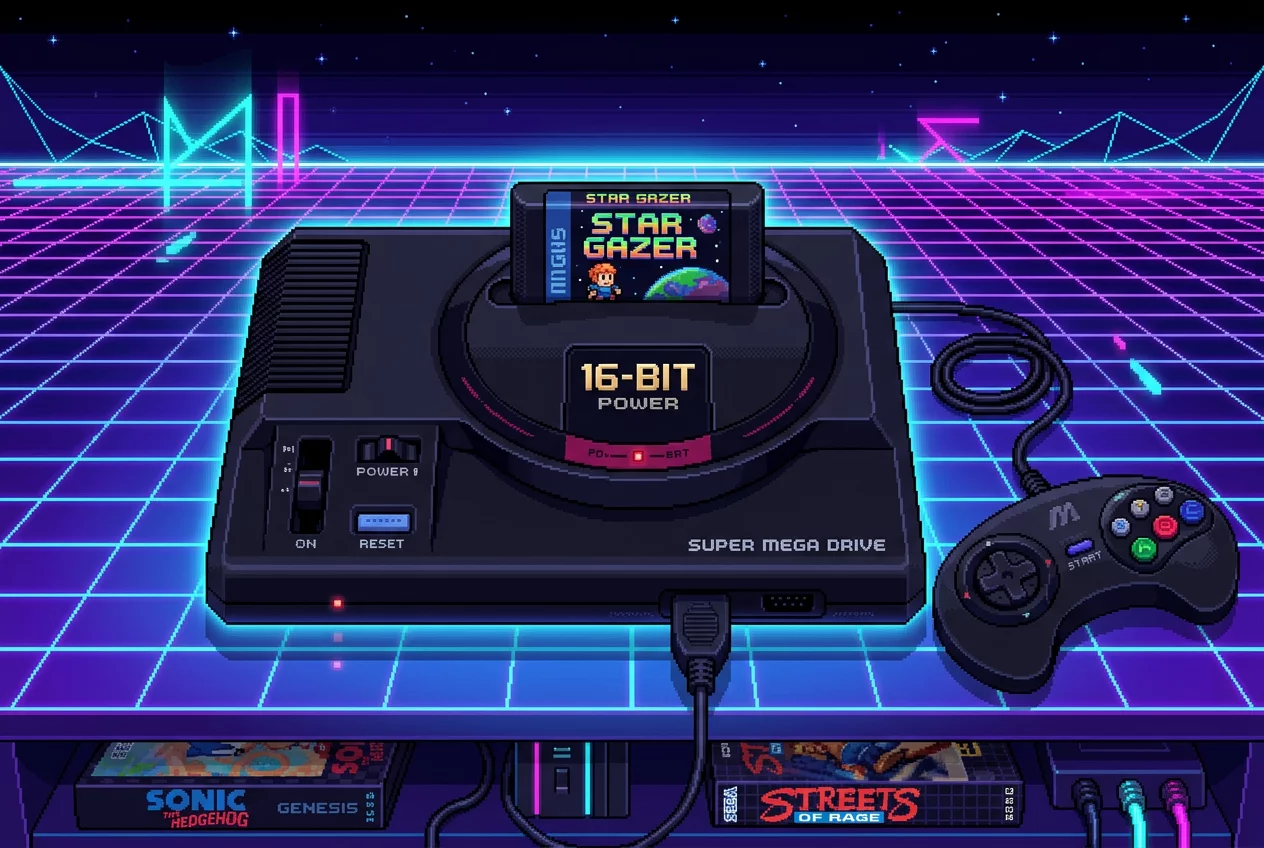
The history of gaming was forever changed when a black, sleek machine landed in living rooms across the globe. Sega, a company already famous for its blistering arcade hits, decided it was time to take on the giants. While the Master System paved the way with its 8-bit charm and technical superiority over many contemporaries, it was the 16-bit Mega Drive—known as the Genesis in North America—that truly ignited the fire of the console wars. This era was defined by an attitude that was faster, louder, and arguably cooler than anything we had seen before.
The Blast Processing Revolution
At the heart of Sega's marketing dominance was the concept of "Blast Processing." While largely a clever buzzword, it represented a real technical advantage in clock speed that allowed for the high-speed scrolling and fluid animation seen in flagship titles. Sonic the Hedgehog wasn't just a mascot; he was a technical demonstration. Running at speeds that made rival platformers look like they were moving through molasses, the blue blur became the face of a generation that demanded momentum and adrenaline.
Arcade Power at Home
Sega's true strength lay in its ability to bring the arcade experience home with uncanny accuracy. Titles that dominated game centers were meticulously ported to the 16-bit hardware. Players could now experience the gritty street justice of Streets of Rage, the mythical carnage of Golden Axe, and the tactical depth of Phantasy Star in their own bedrooms. It created a library of games that felt more mature and intense, appealing to a demographic of gamers who were growing up and looking for more than just colorful fairy tales.
- The Master System's impact on European and Brazilian markets.
- Introduction of the legendary Motorola 68000 processor.
- Iconic peripheral expansions like the Sega CD and 32X.
- The birth of competitive sports gaming with EA Sports and NHL '94.
Even as the industry shifted toward 32-bit architecture and 3D graphics, the 16-bit Sega era remained a benchmark for pixel art excellence and sound chip innovation. The FM synthesis of the Yamaha YM2612 chip gave Sega games a distinct, metallic, and often driving soundtrack that defined the 90s soundscape. Looking back, the golden age of Sega was more than just a collection of plastic cartridges; it was a cultural shift that proved gaming could be edgy, competitive, and technologically groundbreaking.
Leo
April 10, 2026Sega was the best.