
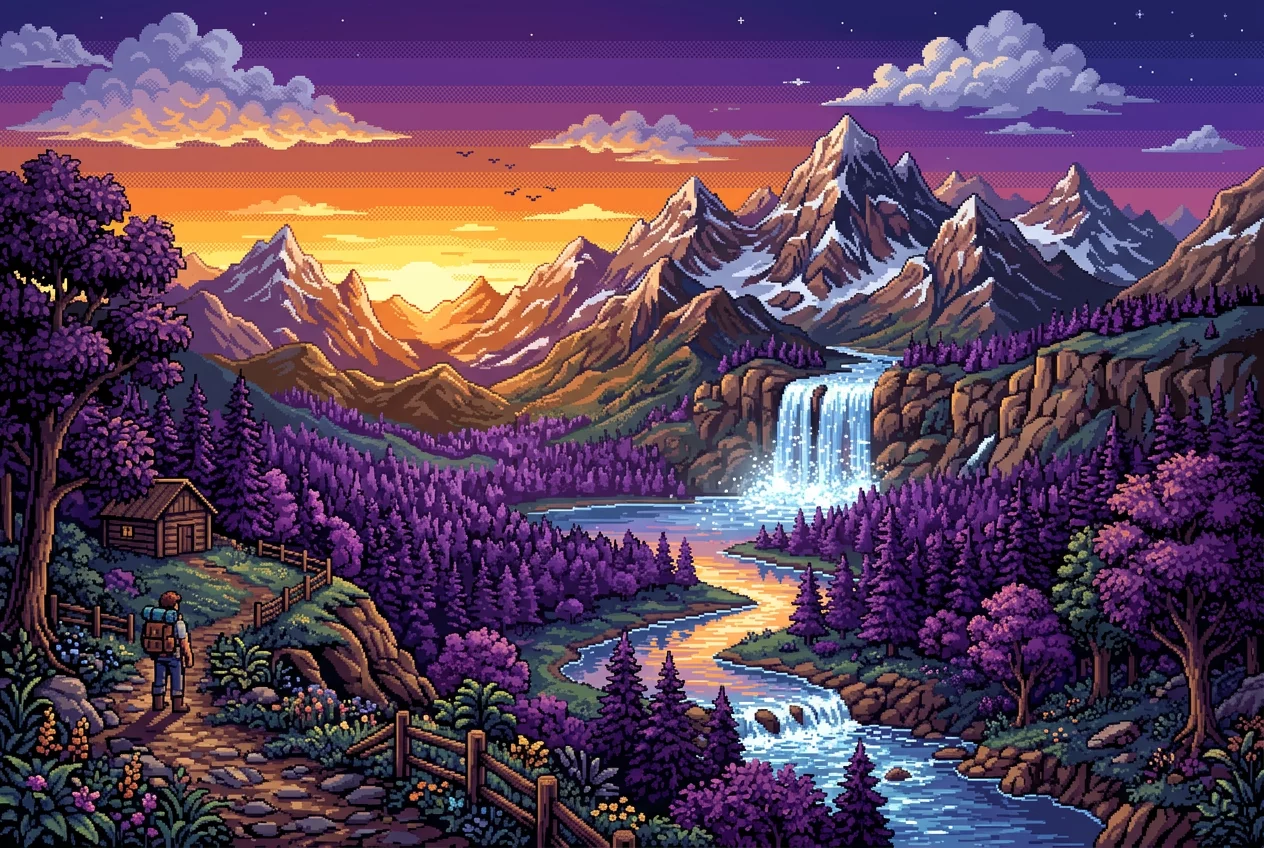
The 16-bit revolution represented far more than a simple numerical increment in processing power. It was the moment video games transitioned from abstract representations of reality into rich, evocative art forms. Systems like the Super Nintendo and the Sega Genesis unlocked a world of possibilities that their predecessors simply could not touch. While modern online experiences offer infinite resolution, the precision of 16-bit art remains unmatched in its efficiency and charm.
Unlocking the Palette
The core of this revolution was the color depth. In the 8-bit era, developers were forced to work with extremely limited palettes—often just a few dozen colors available at once. Backgrounds were often black or flat primary colors to save memory. With the advent of 16-bit architecture, the available palette expanded to thousands, allowing for the inclusion of subtle shading and complex lighting effects. You could finally see the orange glow of a setting sun or the deep purples of a misty forest.
Layering and Parallax
Technological advancements also allowed for multiple background layers. This enabled parallax scrolling, where the background moves slower than the foreground, creating an illusion of depth that was revolutionary for the time. Games used these layers to build worlds that felt vast and immersive, pulling players into the screen in a way that had never been done before. It was the crowning achievement of 2D game design.
The Legacy of Pixels
Even today, the 16-bit aesthetic remains the gold standard for many independent developers. There is a specific clarity to well-drawn 16-bit sprites that high-fidelity 3D graphics often lack. It strikes a perfect balance between detailed artistry and the player's imagination, a sweet spot that defined a generation and continues to sit at the crown of modern indie aesthetics.
The colors were mind-blowing back then.