
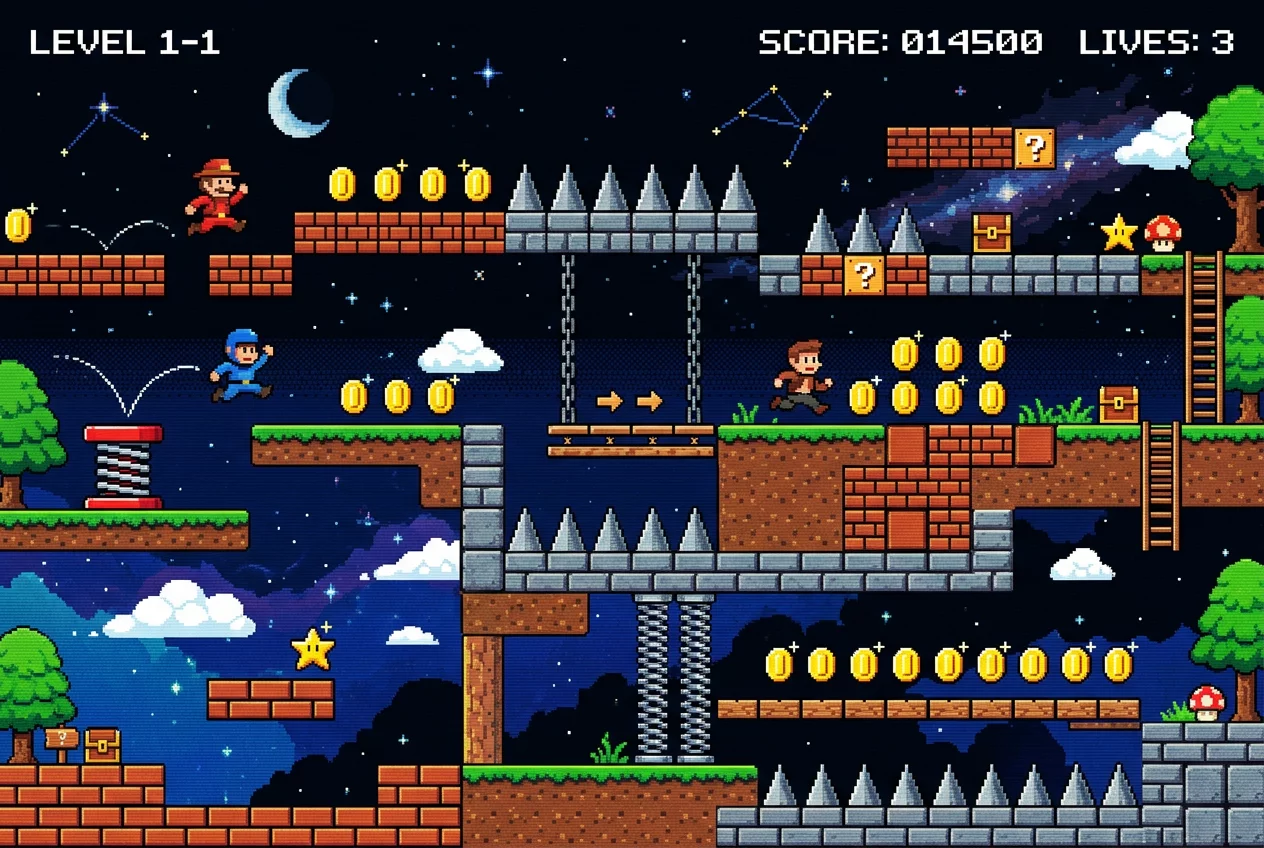
The platformer genre is often considered the foundation of modern digital entertainment. During the 8-bit and 16-bit eras, developers optimized every single pixel to create obstacles that challenged our reflexes and spatial awareness. It was a time when a simple jump wasnt just a move; it was a carefully calculated risk against floating blocks and hidden spike traps.
The Leap of Faith
In the early days of Dendy and Sega, physics engines were rudimentary yet incredibly precise. Characters like Mario or Sonic introduced us to the concept of momentum and inertia. Achieving the perfect speed to clear a wide chasm or land on a narrow moving platform became a core skill. These games required a level of concentration that few modern titles can replicate without the safety nets we’ve grown accustomed to.
Level Design Mastery
The brilliance of 16-bit platformers lay in their environment. Developers used color palettes and parallax scrolling to create depth in a two-dimensional world. We navigated through lush forests, mechanical fortresses, and even underwater labyrinths. Each zone had its own rhythm, usually reinforced by an iconic chiptune soundtrack that stayed in our heads for decades.
- Precise Hitboxes: Mastery over every pixel determined survival.
- The Boss Pattern: Learning movement loops was the key to victory.
- Hidden Secrets: Warp pipes and invisible blocks rewarded curiosity.
These games were tough, sometimes unfair, but they rewarded persistence like no other genre. Even today, the crown of classic gaming belongs to those who can traverse a level without losing a single heart. They defined our childhood and set the standard for what a platforming experience should be: tight, vibrant, and infinitely replayable.
Alex
2026-05-27
Jumping pixels forever. Nothing beats the feeling of a perfect landing.