
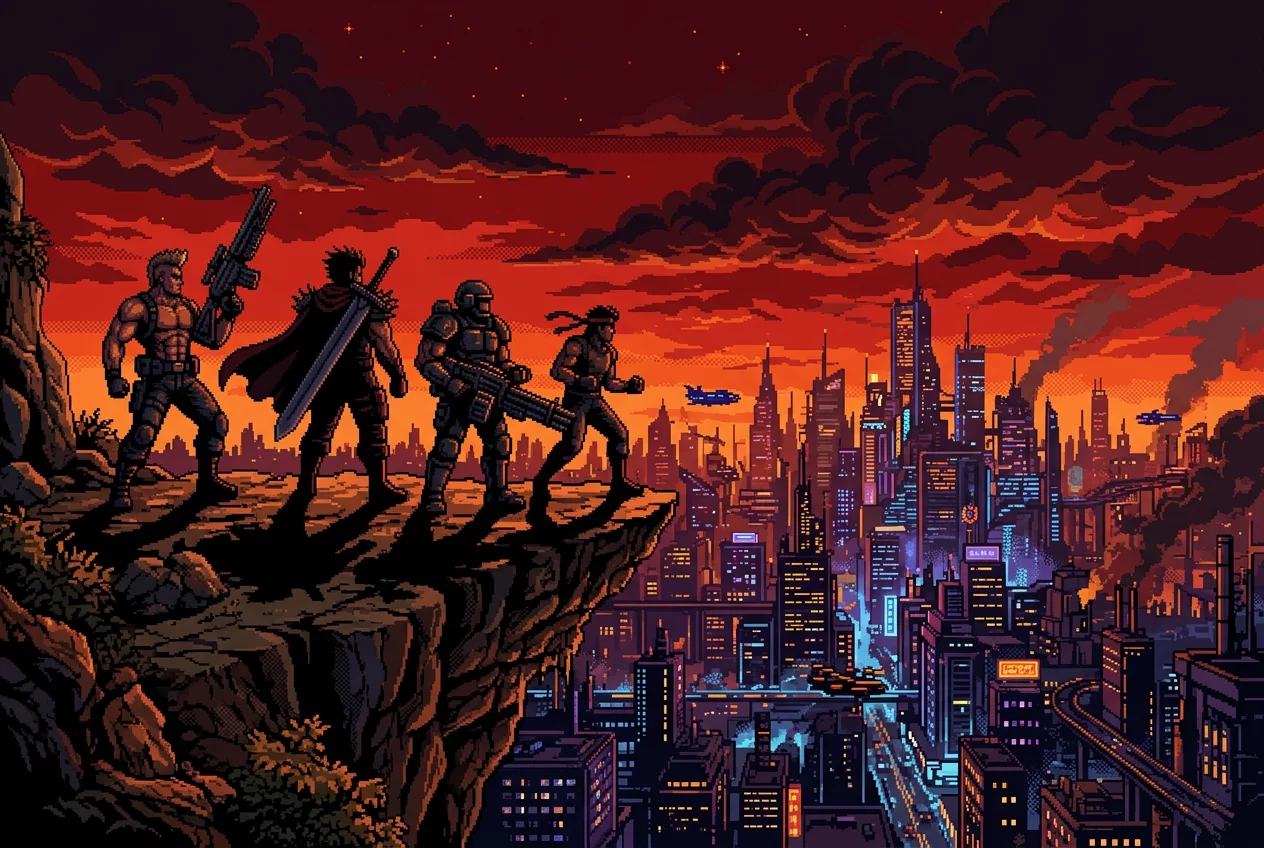
The 1990s represented a unique intersection where hardware limitations met creative explosion. In those days, a hero wasn't defined by millions of polygons or cinematic motion capture. Instead, our legends were built with carefully placed pixels and the sheer will of the player to survive "Game Over" screens. These muscular, bandana-wearing icons became the face of a generation that valued reflex-based gameplay above all else.
The Blueprints of Bravery
Characters from franchises like Contra and Metal Slug set the standard for what an action hero should be. They carried weapons larger than their own torsos and faced off against mechanical monstrosities with nothing but a limited life count. Inside these cartridges, developers pushed the 16-bit processors to their absolute limits to render explosions that filled the entire screen. Players often spent hours mastering every frame of animation to avoid a single stray bullet in these high-stakes environments.
Urban Vigilantes and Street Justice
The side-scrolling beat 'em up genre introduced a different kind of hero. Streets of Rage and Final Fight gave us protagonists who patrolled neon-soaked streets to reclaim their cities from criminal syndicates. These games flourished on the Sega Genesis and Super Nintendo, utilizing rich color palettes and iconic synth-heavy soundtracks. The physical presence of characters like Axel Stone or Mike Haggar felt substantial, providing a tactile sense of impact with every punch thrown against a pixelated thug.
Ninja Gaiden and the Precision Blade
Ryu Hayabusa brought a level of agility and technicality that redefined action platformers. His journey across the NES trilogy and into the 16-bit era required pinpoint precision. The difficulty spikes in these games were legendary, forcing players to develop muscle memory that remains etched in their minds decades later. It was during this era that the concept of the "superhero" gamer was born, as finishing these titles served as a true badge of honor among peers.
The legacy of these 90s heroes continues to influence modern game design. Developers today frequently return to the "retro" aesthetic, attempting to capture the same raw energy and straightforward heroism found in those classic titles. While technology has moved toward photorealism, there is an undeniable charm in a character whose strength is expressed through a handful of colors and a legendary spirit.
Ben
2026-06-14Tough heroes.